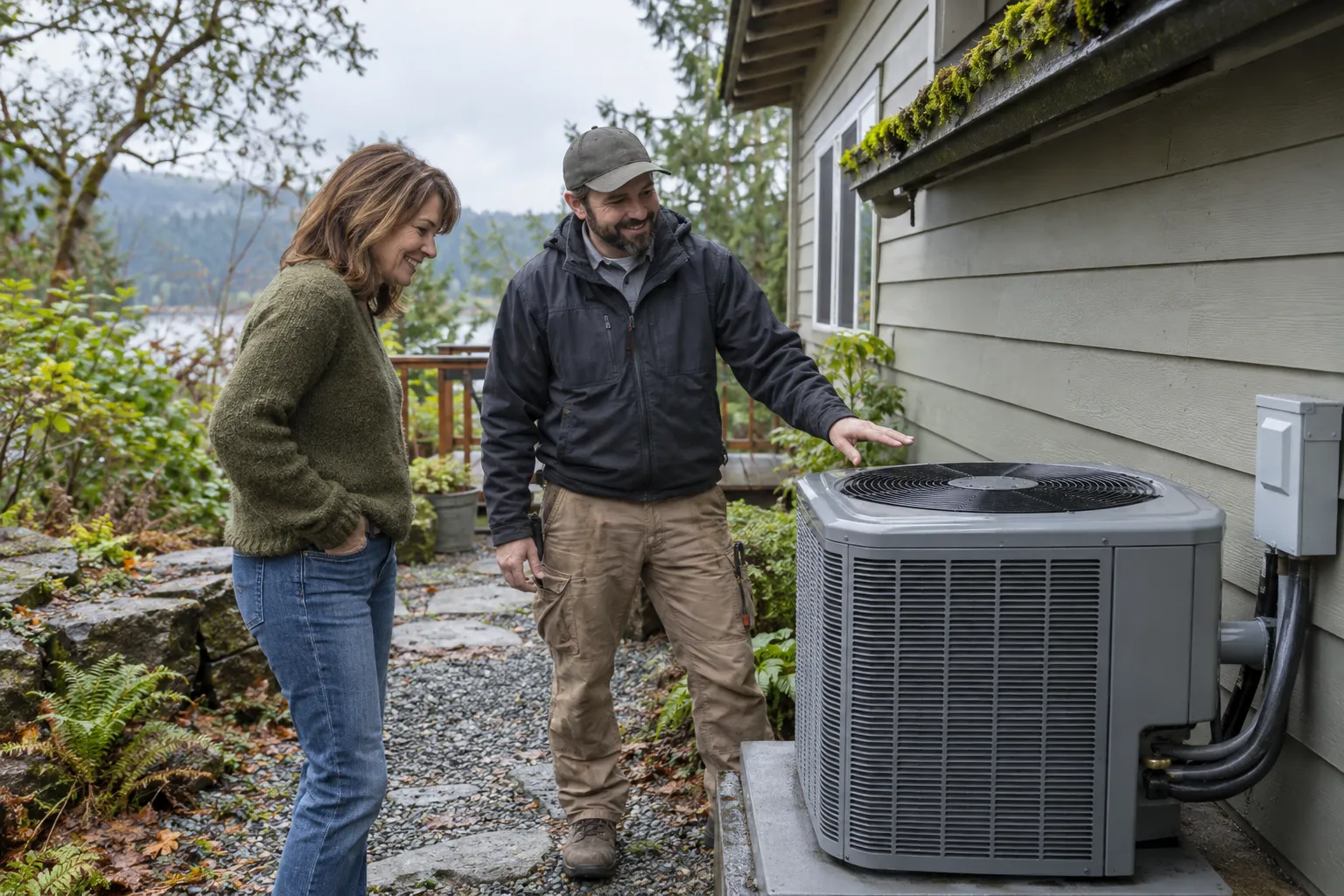
AC Installation & Replacement in Vancouver
Replacing an air conditioner is a big decision, and it is usually one you make for the first time. That can feel like a lot. You do not need to figure it out alone, and you do not need to know the technical terms before you start.
Readersmode Heating & Air is a referral service. It connects you with independent HVAC providers near Vancouver. The providers do the inspecting, sizing and installing. Readersmode Heating & Air simply helps you reach one while the problem is still small. You can ask questions, describe what your system is doing, and learn whether repair or replacement makes more sense. Then you decide what comes next, with no pressure and no obligation.
Is your old AC worth saving?
Most people ask this question late, usually when the house feels warm and the system is making a strange noise. That is normal. The good news is that you can ask it early, too.
A cooling system is a big part of your home's heating and cooling setup. When it starts to fail, a short talk with a local provider can tell you if a repair will do or if a new unit is the calmer choice.
Signs your AC may be ready for replacing
No single sign decides it. But a few of these together are worth a conversation:
- The system is well over ten years old, and many are older than that.
- Repairs keep coming back, one after another.
- Your power bills creep up even though your habits have not changed.
- Some rooms stay warm while others feel fine.
- You hear grinding, rattling or loud clicking.
- The unit uses a refrigerant that is being phased out, which can make repairs harder.
If you see two or three, make a note. Small problem, early, is a good place to ask for advice.
When it stops cooling altogether
A system that quits on a hot day is stressful. Take a breath. First check the thermostat, the breaker and the air filter. If nothing helps, a provider can look at it. Some providers offer emergency AC repair, and many can respond quickly, though availability varies. They can also tell you honestly if the unit is past fixing.
Request a callback to check provider availability near you.
Repair or replace: a simple way to think
Here is a plain rule of thumb. If the unit is fairly new and the problem is small, repair often makes sense. If it is old, has needed several fixes, and the next repair is large, replacement may save you trouble.
Ask the provider to put both choices in writing. Seeing the numbers side by side makes the decision much less scary.
Types of cooling systems
You will hear a few names. Here is what they mean.
- Central split system: an outdoor unit and an indoor coil connected to your ducts. This is the most common setup.
- Heat pump: one system that cools in summer and heats in winter. Mild, damp climates often suit it well.
- Ductless mini-split: small wall units, handy for homes without ducts or for single rooms.
- Packaged unit: all parts in one outdoor cabinet, often used where space is tight.
If your furnace is also old, you may be searching for furnace replacement near me. Mention it. A provider can look at both and explain whether to do them together or apart.
Why proper sizing matters
Bigger is not better. A unit that is too large turns on and off in short bursts. It cools the air but leaves the damp behind, and in a rainy region that can mean a clammy house.
A unit that is too small runs all day and still struggles. A good provider measures your rooms, windows, insulation and layout before suggesting a size. Be wary of anyone who picks a size just by looking at the old unit.
What an installation usually includes
Every job is different, but many installations follow this pattern:
- A walk-through of your home and a look at the current equipment.
- Removal and safe disposal of the old unit.
- Setting the new outdoor and indoor parts.
- Connecting power, refrigerant lines and the drain.
- Checking the ducts and thermostat.
- Testing the system and showing you how it works.
Ask for these steps in the written quote so nothing surprises you later.
Matching the system to your home
Your house shapes the choice. Older craftsman homes may have limited duct space, so a ductless system can fit better. Newer townhomes often have tight outdoor spots, which affects where a unit can go.
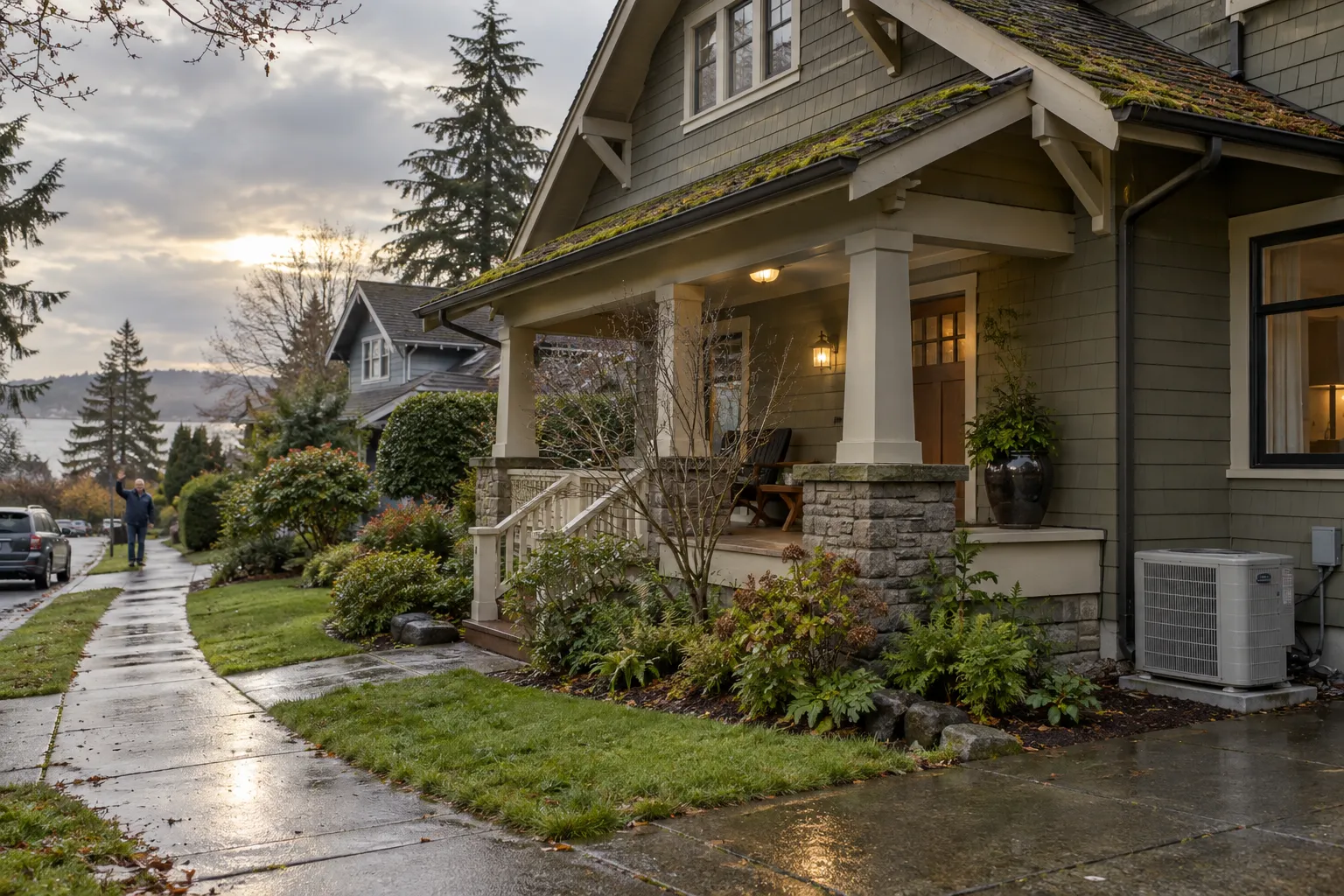
If you have a crawl space, ask how ducts there will be sealed and protected from moisture. Long wet seasons, moss and damp can wear on outdoor equipment, so ask about placement and drainage too.
Efficiency in plain terms
You will see a number called SEER2 on new units. Think of it like miles per gallon for cooling. A higher number generally means less electricity for the same comfort.
In a mild climate you may run your AC fewer days each year. That means a very high rating may take longer to pay you back. Ask the provider to explain what makes sense for how you actually live.
Questions to ask the provider
Write these down before the conversation:
- How did you decide on this size?
- Is the quote in writing, with equipment and labor listed?
- What warranty comes with the equipment and with the installation work?
- Are permits needed, and who handles them?
- How long will the work take?
- What does regular HVAC service look like after installation?
A friendly provider will be glad to answer. If answers feel rushed, you can pause and ask another provider.
Taking the next step
You do not have to decide today. You only have to learn your options. Request a callback to talk with a provider, or use the request form when you are ready. Plain answers first, then your choice.
What's Included
Home Check
A provider looks at your current system, ducts, thermostat and rooms before suggesting anything new.
Proper Sizing
Room size, windows and insulation help a provider choose a unit that fits your home.
Old Unit Removal
Many installations include taking out and disposing of your old equipment safely.
Testing and Walkthrough
After setup, the provider tests cooling and shows you how it works.
Typical AC replacement costs
Prices vary a lot by home, equipment and location. These are typical U.S. ranges only, not quotes. Ask each provider for a written quote that lists equipment and labor.
| Item | Typical range | Notes |
|---|---|---|
| Central AC replacement | $4,000 – $12,000 | Depends on size and efficiency rating |
| Heat pump system | $5,000 – $15,000 | Cools and heats; ducts may affect price |
| Ductless mini-split (one zone) | $3,000 – $7,000 | Extra rooms add to the total |
| Outdoor unit only | $2,500 – $7,500 | Only if indoor parts still match |
| Thermostat upgrade | $150 – $600 | Smart models cost more |
| Duct repair or changes | $500 – $3,500 | Needed in some older homes |
How It Works
Reach Out
Request a callback or use the request form. Share what your AC is doing and how old it is.
Talk With a Provider
A local provider asks questions and explains whether repair or replacement may fit.
Review the Written Quote
Look over equipment, labor and timing. Ask questions about anything unclear.
Choose Your Next Move
Decide with the provider when to schedule installation, or take time to compare.
Why Call Readersmode Heating & Air
Less Searching, More Talking
Reach an independent local provider without sorting through endless listings on your own.
Plain Answers
Providers can explain choices in simple words, step by step.
Made for Beginners
No jargon needed. Ask anything, even if it feels like a basic question.
No Pressure
Learn your options and compare quotes. You decide if and when to go ahead.
Other Services
Need ac installation & replacement in Vancouver?
Questions about AC repair or replacement? Send a note to contact@readersmode.lat or use the request form, and we will point you toward a local provider.
No obligationAC Installation & Replacement FAQ
How do I know if I need a new AC or just a repair?
Age, repair history and cost matter most. An older unit with repeated problems often points toward replacement. A provider can compare both options in writing.
How long does an AC installation usually take?
Many replacements take about one day, though some jobs need more time. Ductwork changes, permits and the type of system can all affect the schedule, so ask the provider for an estimate.
How long does a central air conditioner last?
Many central AC units last around 12 to 15 years, sometimes longer with regular care. Climate, use and upkeep all play a part, so a provider can look at your unit.
Request a callback
Questions about AC repair or replacement? Send a note to contact@readersmode.lat or use the request form, and we will point you toward a local provider.
No obligation